What must be done to register trademarks and patents in China?
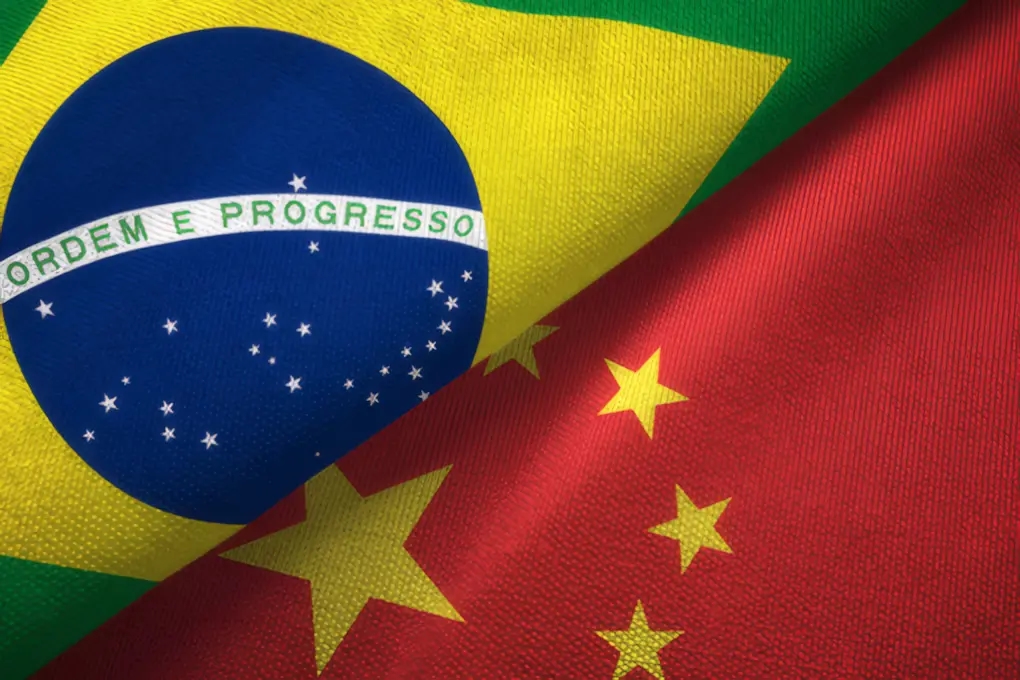
President Lula's visit to China and the signing of 20 bilateral agreements in the areas of technology, innovation and sustainable development reinforces a relationship with Brazil’s largest trading partner since 2009 and imposes a series of legal issues to be discussed subsequently to this entering into new partnerships with the Asian giant. One of the important issues is related to the protection of intellectual property (IP) of Brazilian products in the Chinese market.
In the relationship between the two countries, an important point to be considered, according to specialists consulted by LexLatin, is the importation of counterfeit products from Asia, mainly clothing, electronics and pharmaceutical products. Today, according to the Brazilian Association to Combat Counterfeiting (ABCF), almost two thirds of pirated products sold here come from China, especially electronics and auto parts. These goods enter Brazil mainly through the land borders of Bolivia, Paraguay and French Guiana.
And this is a market that affects national production. A 2020 estimate by the National Forum Against Piracy and Unlawfulness (FNCP) shows that there were losses in at least 15 areas of the industry due to the sale of counterfeit products. The value reaches USD40 billion (BRL196.8 billion).
But China has taken other directions in recent years. The economic power that used to copy, without respecting copyright, is now creating technology. Today, the Chinese have the highest number of patent applications per year. The country is one of the countries that files the most patents, taking a leadership position in yet another global ranking.
For Brazilian businesspeople looking to export to the Asian giant, the challenge is to understand the bureaucracy and local laws. And most importantly: investing there in the protection of intellectual property. The legal path, according to the lawyers consulted, is to look for law firms that have what is called a “China Desk”, local representation that handles all the procedures between the two countries.
According to IP professionals, the recommended measures are similar to those taken in Brazil and in other countries and involve issues such as trademark registration, industrial design, copyright and patents. It is also necessary to register rights at Chinese customs, monitor pirated files and keep an eye on possible violations throughout the process.
“The practice is to hire a Brazilian firm that has a correspondent there in China to register your trademark. For each country where you want to market your product, you will need to register your patent or trademark. It is also important to have a local representative because you will have a chain with the distributor itself. You can make an agreement so that a company can use and sell your products there”, explains Lucas Antoniazzi, a lawyer specialising in Intellectual Property and Entertainment Law.
"The protection of intellectual property is fundamental for competition in the Chinese market and in other markets and it starts with the need for companies to create a culture of protection of intellectual assets. The culture of protection of intellectual assets in Brazil and, later, abroad, will allow appropriate protection of investments in innovation”, says Claudio Barbosa, a lawyer specialised in digital law and partner at the law firm Kasznar Leonardos.
The trade relationship between the two countries
Last year alone, Brazilian exports to China reached USD89 billion (BRL438.77 billion). Today, what leaves the ports for the Asian giant is mainly commodities: soybean (36%), iron ore and derivatives (20%), crude oil (18%) and beef (8.9%). For specialists, the expected positive effect of the increase in the Brazilian crop on GDP depends largely on the recovery of Chinese demand for Brazilian products.
In 2012, exports to China represented 17.2% of all Brazilian trade with other countries. Last year, this volume rose to 26.8%, an increase of 56% in ten years. And the prospect is that this share will grow even more, especially in agribusiness, which represents almost a third of everything we send to the second largest economy in the world.
In the other direction, with respect to products that come from China to Brazil, the story is different. Last year, we imported USD60.74 billion from the Chinese, with an emphasis on thermionic valves and tubes (11%), organic-inorganic products (8.2%) and telecommunications equipment (6.8%).
Given this scenario, a challenge is being imposed on the largest economy in Latin America: to be more competitive in other areas, mainly in industrialised products, which can reduce the current dependence on commodities. It is no wonder that the presidential entourage took more than 100 businessmen to China.
And this increase in the variety of the Brazilian export basket involves the protection of the intellectual property (IP) of the products that leave here. Today, there are global agreements that set out basic protection issues. Both countries are signatories to the main international treaties for IP protection: the Paris Convention, the Berne Convention, the WTO TRIPS Agreement and the Madrid Protocol, which defines the registration of international trademarks. But practices vary widely and involve situations that are often unique according to local laws.
In Brazil, Law 9,279/96 contains the main regulations that bring together the rights and obligations and involves patents for inventions and utility models, industrial design registrations and trademark registrations. The legislation prevents, at least on paper, false geographical indications and unfair competition. The law also determines what can be protected, rules of use, violations and punishments.
At LexLatin’s request, IP specialists prepared a quick guide on how Brazilian companies can protect their trademark in the Chinese market.
Trademark filing:
It is recommended that companies that do business with China register their trademarks in that country, especially in cases of exporting products or in cases of using industries on Chinese soil to manufacture products.
Registration with the competent authority (in this case, the China National Intellectual Property Administration – CNIPA) ensures the right to use a trademark in China, preventing the sign from being unduly appropriated by third parties (which could result in a ban on manufacturing, marketing, importation or exportation of products to or from China).
Registration allows copyright holders to combat piracy and also makes it possible to collect royalties through trademark licensing.
Interested companies can register their trademark directly with CNIPA, through a local industrial property agent, or through an international registration with WIPO, the World Intellectual Property Organization.
"As a rule, the first option is less expensive if the only foreign country of interest is China, while international registration via WIPO presents more advantages (including financial) if the Brazilian company wants to register its trademark in three or more countries", evaluates Peter Siemsen, partner and specialist in intellectual property at Dannemann Siemsen.
Patent filing:
The protection of technological innovations via patents also demands care so that the rights are extended to other countries. In this case, specialists recommend the use of the PCT – Patent Cooperation Treaty, an international treaty that aims to simplify the filing of patent applications in multiple countries.
The author of the application may file a PCT application within a period of 12 months from the filing of the original application made in Brazil. After that period, the technology that is the subject matter of the patent application will fall into the public domain in territories where protection is not requested.
“As patents require very high investment and the process is often slow, companies take time to make the decision to export. It is important to have a good strategy at the start, because if you miss any deadline, the patent falls into the public domain and there is no way back”, explains Peter Siemsen.
Once a filing using the PCT system has been decided upon, the applicant must designate China as the country of interest and will have a period of 30 months, counting from the filing date in Brazil, to decide to enter the national phase in China.
But it is good to remember that the mere granting of a registration or patent does not prevent third parties from copying the intellectual property.
In recent years, China has increased the attack on pirated products in its territory. Both the Legislative and the Judiciary are more severe and have increased the amount ocompensation in civil actions, with mechanisms of “punitive damages” and “social credit penalties” against violators, with special attention to those who make these products available which violate IP systems on internet sales platforms.
According to specialists, there is still a long way to go when it comes to discussing intellectual property, but much has already been done, which today provides more legal certainty for Brazilian businesspeople who want to export to China.
“Intellectual property protection is critical to competition in the Chinese and other markets, and it starts with the need for companies to create a culture of protecting intellectual assets. The culture of protecting intellectual assets in Brazil and, later, abroad, will allow appropriate protection of investments in innovation”, says Claudio Barbosa.
“The two countries have evolved and today have very robust legislation, which effectively guarantees the exercise of the rights of holders here and there. Brazil and China have, in recent years, entered into international treaties that make it much easier for Chinese or Brazilians to develop an appropriate strategy to protect their trademark or patent rights. Today Brazilians manage to protect their intellectual property in China and vice versa. The Chinese also have a partner in Brazil that has a very solid legal framework in the protection and exercise of rights, for example, of trademarks and patents”, assesses Peter Siemsen.